Tile Calculator
Calculate how many tiles, grout, and thinset you need for floors and walls. Get practical estimates for common tile sizes and layout patterns.
Calculate how many tiles, grout, and thinset you need for floors and walls. Get practical estimates for common tile sizes and layout patterns.
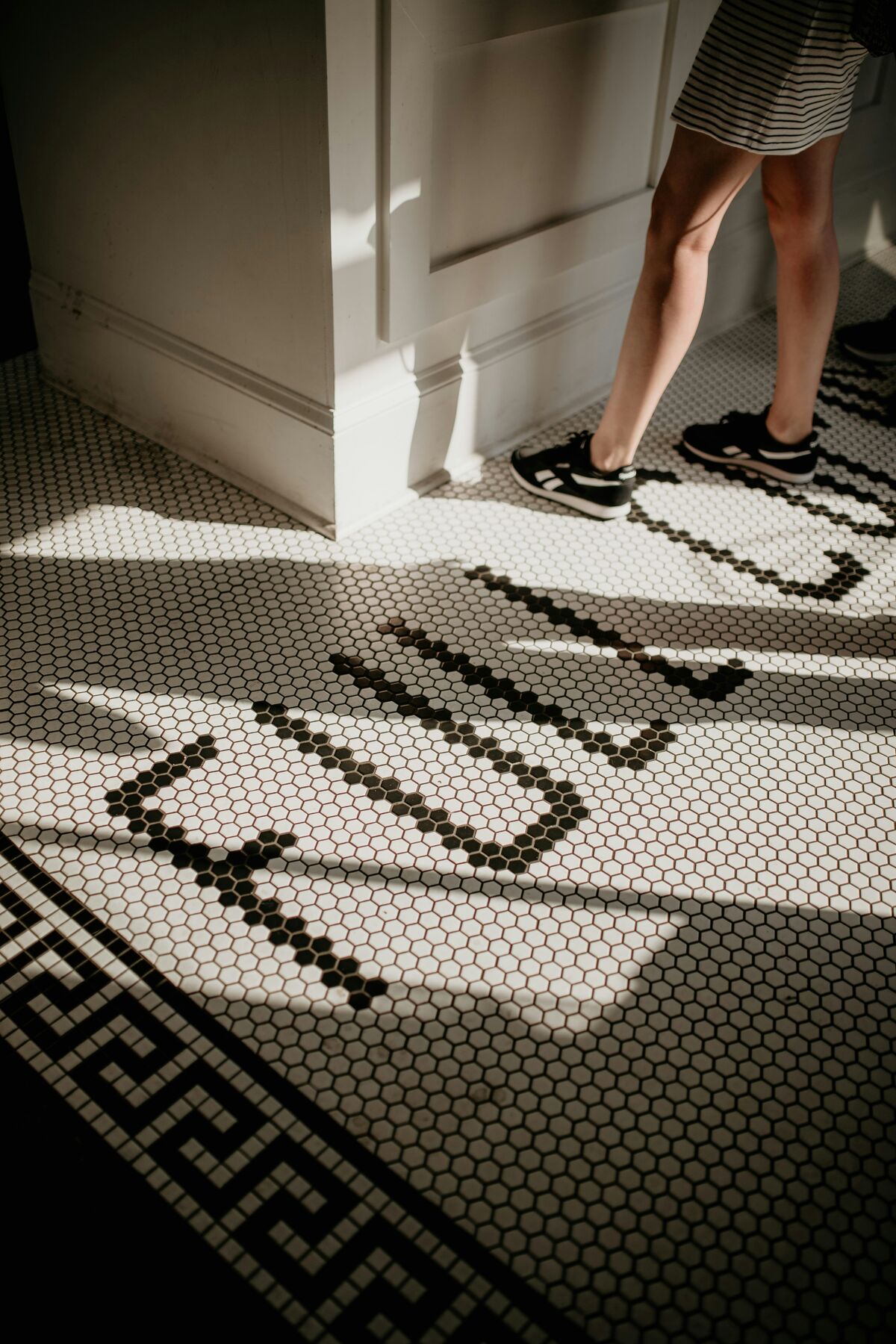
Tile layout example with grout joints. Larger grout joints require fewer tiles but more grout.
Measure your space. Figure out how many tiles fit. Add waste. Order. It's actually that simple, but people overthink it or underestimate waste and end up short. Let's walk through it: area times tiles per square foot (which depends on tile size) equals tiles needed. Then you add waste for cuts, breakage, and mistakes. That's it. The thinset and grout are separate—they need their own estimates.
Grid layout (straight rows and columns): simplest to install, ~10% waste. Running bond (offset rows, like brick): adds visual interest, ~12% waste. Diagonal (45-degree angle): spacious look but lots of cutting, ~18% waste. Herringbone (V-pattern): fancy and professional but demands precise work, ~25% waste. Subway tile/offset rectangular: middle ground, ~12% waste. If you've never done tile before, pick grid. If it's professional installation, they know what pattern needs how much waste—ask them.
1/8" joint (standard, tight): you're buying 10-12% more tiles than if the grout took no space. 1/4" joint (wider, modern look): uses less tiles but way more grout. A 1/8" joint costs you about 1 lb grout per square foot. A 1/4" joint costs 1.5–2 lbs per square foot. Wide joints look great on large tiles (12×24, 18×18). Narrow joints work for small tile (6×6) or mosaics.
Thinset is the glue. How much you need depends on tile size and how thick you spread it. Wall tiles (small) with a 1/4" notch trowel: a 25-lb bag covers roughly 50 sq feet. Floor tiles bigger than 12×12 with a 1/2" notch: a 50-lb bag covers about 25 sq feet. Use the wrong notch size and you get voids under the tile, which means they crack later. This calculator estimates standard coverage, but your installer or product instructions are your real reference.
Straight grid with square tiles? 10% is honest. Running bond? 12%. Diagonal or herringbone? 15–25%. That extra percentage covers cutting mistakes, broken tiles during installation, shipping damage, and keeping a few for repairs five years later when you chip one. Always round up to whole boxes when ordering. If the calculator says 143 tiles and boxes are 9 tiles each, that's 16 boxes (144 tiles). You're not buying an extra 1 tile anyway.
Order one or two extra boxes. Tile colors vary slightly between manufacturing batches (dye lots), so if you chip a tile in year 3, you want original stock, not a new batch that looks slightly different. Store the extras in a dry place. Label them with the job date and tile lot number. Seriously, do this. It's cheap insurance.
| Tile Size | Tiles/Sq Ft | Tiles/Box (typical) | Sq Ft/Box | Best For |
|---|---|---|---|---|
| 6×6" | 4.0 | 45 | 11.3 | Small walls, mosaics |
| 12×12" | 1.0 | 9 | 9.0 | Floors, walls (most popular) |
| 12×24" | 0.5 | 6 | 12.0 | Floors, walls (modern) |
| 18×18" | 0.44 | 4 | 9.0 | Floors, large spaces |
| 24×24" | 0.25 | 3 | 12.0 | Large floors, commercial |
6×6": 4 tiles. 12×12": 1 tile. 12×24": half a tile. 18×18": 0.4 tiles. 24×24": 0.25 tiles. Grout width tweaks it slightly, but those are your baseline numbers.
Grid layout: 10%. Running bond (offset): 12%. Diagonal or herringbone: 18–25%. Never less than 10%. You're cutting, breaking, messing up. Order an extra box anyway—future repairs demand matching tiles from the same lot.
10% is for simple straight layouts. 15% is for patterns with more cuts. Complex patterns need 20–25%. If you're unsure or it's your first time, go 15%. Extra tiles sitting in your garage are cheaper than stopping work mid-project.
1/8" joints: roughly 1 lb per sq ft. 1/4" joints: 1.5–2 lbs per sq ft. Wider joints = more grout. The calculator handles this, but know that a big wide-joint tile needs serious grout budget.
25-lb bag: ~50 sq ft for wall tiles (1/4" notch). 50-lb bag: ~25 sq ft for big floor tiles (1/2" notch). Using the wrong notch size kills coverage and creates voids. Ask your installer or check the product bag.