Concrete Block Calculator
Estimate concrete block count, mortar, and material cost for a masonry wall. Verify openings, reinforcement, and local requirements before ordering.
Block Calculator
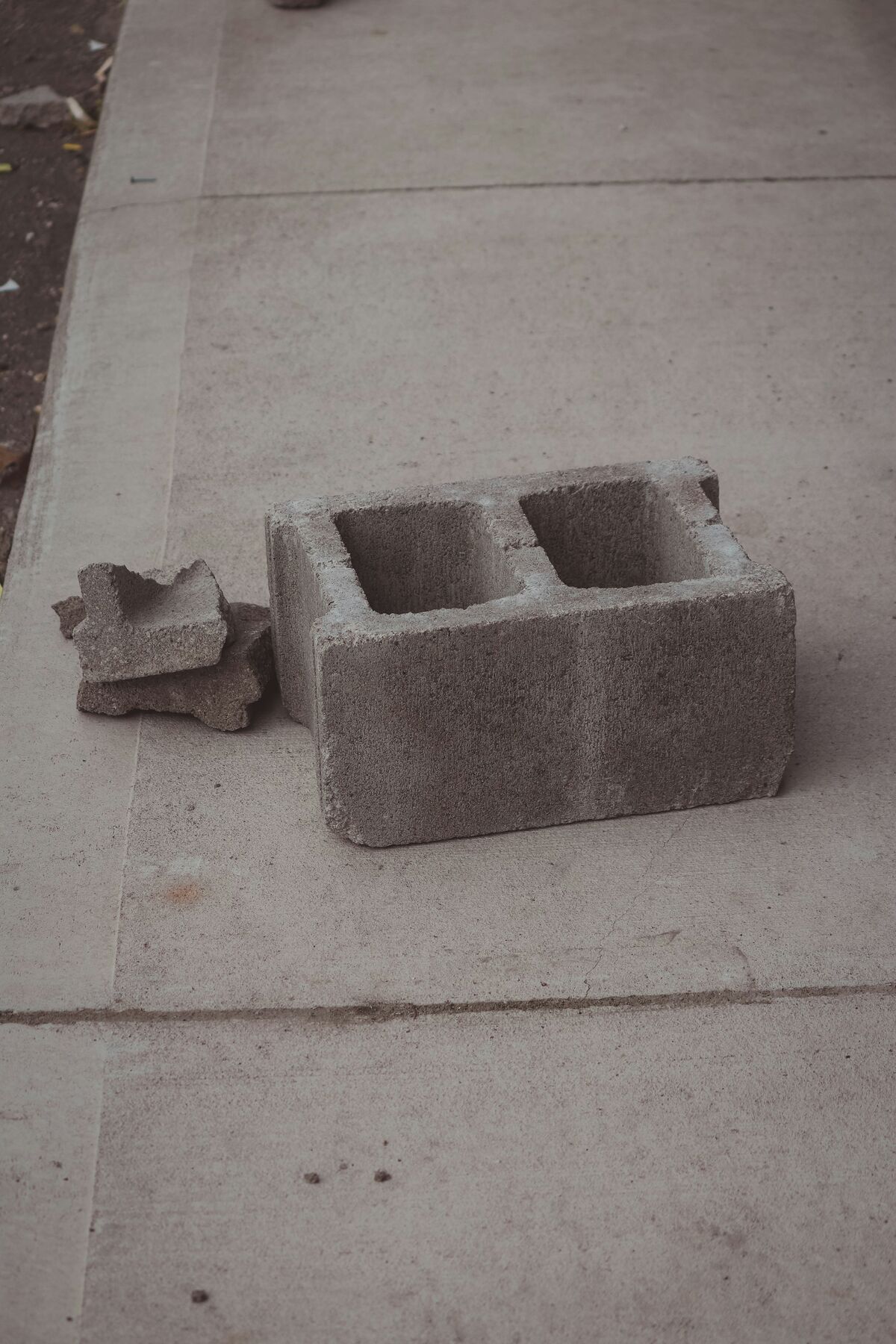
Concrete block wall with typical mortar joints and dimensions
What is a Concrete Block (CMU)?
Concrete blocks—officially Concrete Masonry Units or CMU—are hollow rectangular chunks made from Portland cement, sand, and water. They're basically nature's LEGO for walls. Masons love them because they're cheap, tough, and you can stack them fast. One standard 8×8×16 block weighs about 35-40 lbs, and after laying 200 of them, your back knows every single one.
You'll run into CMUs in five widths: 4", 6", 8", 10", and 12" (nominal). The "8×8×16" you see listed? That's the nominal size. Actual dimensions are about 3/8" smaller on each face—that gap's for mortar. You'll see them in basement walls, retaining walls, entire commercial buildings, you name it.
Standard Concrete Block Sizes & Weights
Block size matters. A 4-inch block won't handle vertical load. An 8-inch? That's your workhorse for residential and light commercial. Here's what you're actually dealing with:
| Nominal Size (WxHxL) | Actual Size | Weight (lbs) | Blocks per Sqft | Common Use |
|---|---|---|---|---|
| 4×8×16 | 3.625×7.625×15.625" | 25–30 | 1.125 | Interior, partition walls |
| 6×8×16 | 5.625×7.625×15.625" | 35–40 | 1.125 | Load-bearing walls, general construction |
| 8×8×16 (Standard) | 7.625×7.625×15.625" | 35–45 | 1.125 | Most common for residential/commercial |
| 10×8×16 | 9.625×7.625×15.625" | 50–55 | 1.125 | Heavy-duty load-bearing walls |
| 12×8×16 (Large) | 11.625×7.625×15.625" | 60–70 | 1.125 | High walls, commercial buildings |
How to Calculate Concrete Blocks for a Wall
Math time. But don't worry—it's simple stuff.
- Wall area: Length × Height. Done.
- Block face area: An 8×8×16 block covers roughly 0.89 sqft when you account for mortar joints.
- Divide: Wall area ÷ block coverage = blocks needed.
- Add waste: Tack on 5% for breakage and cuts. Blocks break. Saws slip. It happens.
Real Example
You're building a 20-foot wall that's 8 feet tall with standard 8×8×16 blocks.
- Wall area: 20 × 8 = 160 sqft
- Coverage per block: 0.89 sqft
- Blocks: 160 ÷ 0.89 = 180 blocks (rounding)
- Add 5% waste: 180 × 1.05 = 189 blocks total
Order 190 or 195. Your supplier will want round pallet numbers anyway.
Mortar Coverage & Requirements
Mortar is the glue. Most folks use 3/8" or 1/2" joints—check your local code first.
With standard 8×8×16 blocks and 3/8" joints? Figure 7-8 bags of mortar per 100 blocks. Go with 1/2" joints (looks nicer, bonds stronger), and you're looking at 9-10 bags per 100. Type S mortar from Quikrete or Sakrete will run you $4-7 per bag depending where you shop. Always buy 15% extra. You'll spill it, remix it, and there's always leftover work.
Tips for Ordering Concrete Blocks
- Order 5-10% extra: Blocks break in transit. Guys drop them. The wet saw jams. Just build 5-10% cushion into your order.
- Call ahead: If you need 500+ blocks or anything unusual (like 4-inch stretchers), contact your supplier first. Some places stock only 8x16 all day long.
- Know your block age: New blocks wick moisture. Lay them wet if your timeline's tight, but ideally you'd let them cure 28 days. Won't happen on a real job, so don't sweat it.
- Delivery math: One pallet (about 70-75 blocks) weighs 2,800-3,500 lbs. Have a forklift ready or you're unloading by hand—which sucks.
- Local code check: Building inspector will care about block strength grade, rebar spacing, and grout fill on load-bearing walls. 4-inch blocks? Code says no for anything structural. Don't bother arguing.
Load-Bearing vs. Partition Walls
Load-bearing walls hold up the building. Use 8", 10", or 12" blocks, run rebar vertically (every 32" on center, minimum), and grout solid on load-bearing courses. These are your exterior walls and the ones holding up second floors.
Partition walls are just dividers. You can use 4" or 6" blocks here. No rebar needed, no grout fill. They're faster and cheaper. But—if you skip the fire rating or sound proofing your local code requires, the inspector shuts you down.
Block Sizes, Weights & Mortar Requirements Reference
Quick lookup table. These numbers cover most residential and light commercial work:
| Block Size | Face Area (sqft) | Weight per Block (lbs) | Mortar per 100 Blocks (3/8" joint) | Mortar per 100 Blocks (1/2" joint) |
|---|---|---|---|---|
| 4×8×16 | 0.22 | 25–30 | 6–7 bags | 7–8 bags |
| 6×8×16 | 0.33 | 35–40 | 6–7 bags | 8–9 bags |
| 8×8×16 | 0.44 | 35–45 | 7–8 bags | 9–10 bags |
| 10×8×16 | 0.55 | 50–55 | 8–9 bags | 10–11 bags |
| 12×8×16 | 0.67 | 60–70 | 9–10 bags | 11–12 bags |
Frequently Asked Questions
Roughly 1.125 blocks per square foot for standard 8×8×16 blocks. So 100 sqft needs about 112 blocks; add 5% waste and you're at 118 blocks.
Use 6×8×16 for walls up to 4 feet, and 8×8×16 (or larger) for anything taller or sitting on poor soil. Walls over 6 feet? Get an engineer involved—local code will require calculations and probably rebar. Don't guess on retaining walls.
About 7-8 bags (60-lb bags) per 100 standard 8×8×16 blocks with 3/8" joints. Thicker joints or larger blocks push it to 9-10 bags. Buy 15% extra—you'll need it.
Total wall area minus opening area. Example: 160 sqft wall minus 12 sqft window = 148 sqft of blocks. But remember—you need lintels and extra corner/header blocks around the opening, so order a few extra.
Nominal sizes: 4×8×16, 6×8×16, 8×8×16, 10×8×16, and 12×8×16. Actual size is 3/8" smaller per dimension for mortar room. Use actual dimensions for calculating quantities.