Pool Volume Calculator
Calculate how many gallons, liters, and cubic feet your pool holds. Works for rectangular, round, oval, and kidney-shaped pools.
Pool Dimensions
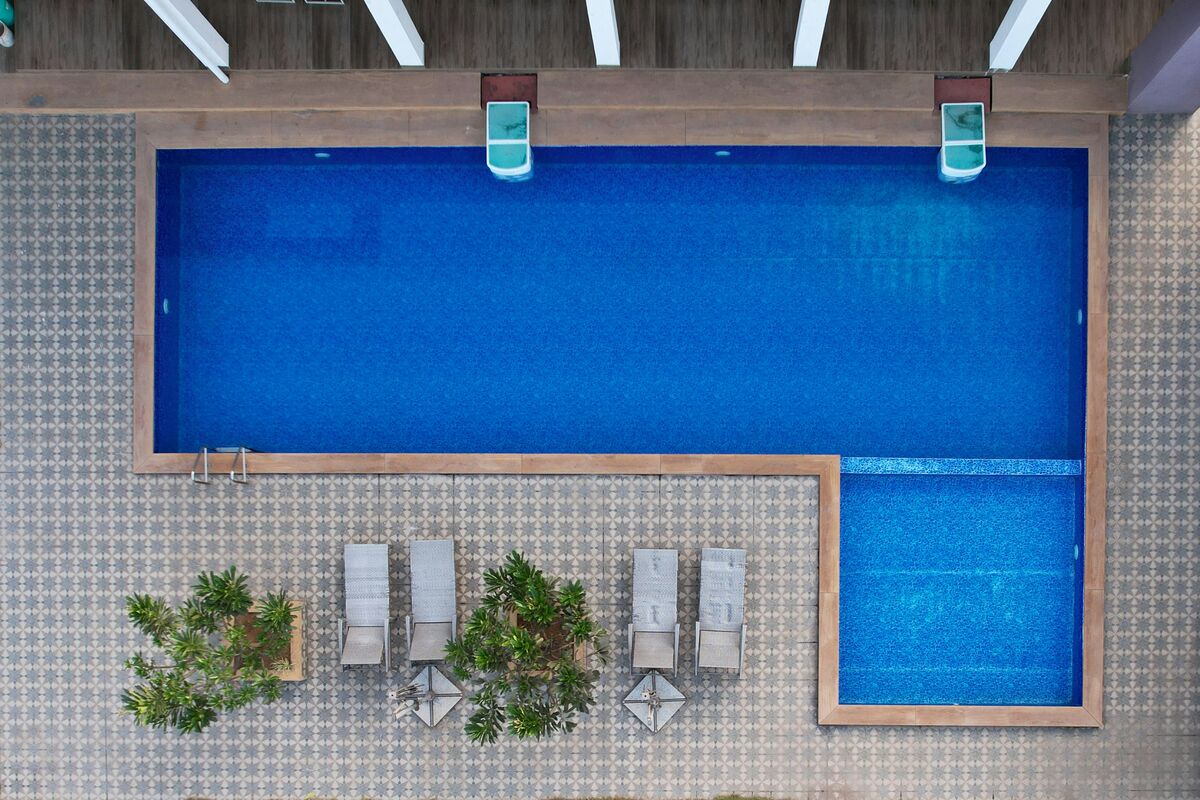
Pool cross-section showing length, width, and average depth measurements
Getting Your Pool Volume Right
Basic Formulas (by Shape)
Look, it's not complicated. All pool volume math comes down to one thing: length × width × depth × 7.48. The 7.48 factor? That's how many gallons fit in a cubic foot. Simple.
Rectangular pools: Measure length, width, and average depth. Multiply them together, then by 7.48 and you're done.
Rectangles are your easiest calculation. Get the straight edges, average the deep end with the shallow end for depth, and you've got it. A standard 16×32 rectangular pool at 5.5-foot average depth holds about 20,000 gallons. That's a lot of chlorine.
Round pools: Diameter squared, times pi, times depth, times 7.48. Or just: use the calculator.
The only tricky part? Don't forget pi (3.14159). Round pools are popular for above-ground setups because they're cheaper to build and easier to maintain than rectangles.
Oval pools: Same idea as round, but you're multiplying by length and width separately. Still manageable.
Ovals are basically stretched circles. The math works the same way—you're just dealing with two different diameters instead of one.
Kidney-shaped or freeform: Here's where it gets messy. Break it into pieces or estimate surface area and multiply by depth.
Not every pool is a perfect shape. For wonky ones, take a photo from above and use an area-measurement tool. Or estimate conservatively: figure the area of a bounding rectangle, multiply by 0.85, then multiply by depth and 7.48. You'll be close enough.
Why This Actually Matters
So you want to just fill the pool and swim, right? Hold up. Knowing your volume is the difference between a clean, safe pool and a maintenance nightmare.
- Chemicals: Chlorine, pH buffers, alkalinity—they're all dosed per 10,000 gallons. Get it wrong and you're either fighting algae or burning people's eyes and skin.
- Pump size: Your pump has to circulate the whole pool 1-2 times per day. Too small and debris just sits there. Too big and you're burning electricity for nothing. Getting volume right means getting pump size right.
- Heater: BTU requirements scale with volume. Undersized and your pool stays cold. Oversized and you're wasting money every single day of the season.
Measuring Depth (the Right Way)
Most pools get deeper on one end. Shock news. So you don't use shallow-end depth or deep-end depth—you use average depth.
Grab a long pole or weighted measuring tape. Test at three spots: shallow end, middle, and deep end. Add those three numbers, divide by 3. That's your average. Example: 3 ft + 4.5 ft + 6 ft = 13.5, divide by 3 = 4.5 ft average. Use that number in your formula.
The Conversion Numbers You'll Need
The magic number is 7.48—that converts cubic feet to gallons. If someone asks for liters or wants to go metric:
- Cubic feet to liters: multiply by 28.317
- Gallons to liters: multiply by 3.785
- Liters back to gallons: multiply by 0.264
Common Sizes (for Reference)
Not sure if your pool is big or small? Here's what most people have:
- Compact (12×24 at 4 ft deep): 8,640 gallons—small enough to stay manageable
- Typical backyard (15×30 at 5 ft deep): 16,875 gallons—the sweet spot for most homeowners
- Large (20×40 at 6 ft deep): 35,840 gallons—serious commitment to maintenance
- Olympic size (164×82 at 6.56 ft deep): 660,000 gallons—yeah, that's not your backyard
Common Pool Sizes Reference Table
| Pool Shape & Size | 4 ft Depth | 5 ft Depth | 6 ft Depth |
|---|---|---|---|
| Rectangular 12×24 ft | 8,640 gal | 10,800 gal | 12,960 gal |
| Rectangular 15×30 ft | 13,500 gal | 16,875 gal | 20,250 gal |
| Rectangular 20×40 ft | 23,920 gal | 29,900 gal | 35,840 gal |
| Round 15 ft diameter | 6,359 gal | 7,949 gal | 9,539 gal |
| Round 20 ft diameter | 11,306 gal | 14,132 gal | 16,959 gal |
| Oval 15×8 ft | 4,483 gal | 5,604 gal | 6,725 gal |
| Oval 20×12 ft | 8,973 gal | 11,216 gal | 13,459 gal |